Best Lawn Mowing Height for Different Grass Types
Understanding the best lawn mowing height for different grass types is one of the simplest yet most overlooked factors in maintaining a healthy lawn. Cutting your grass at the wrong height stresses the turf, invites disease, and makes your yard look thin and patchy. The good news: getting this right takes just a few minutes of adjustment to your mower and a basic understanding of your grass species.
Why Mowing Height Matters for Grass Health
Grass height directly impacts root depth, drought tolerance, and disease resistance. When you cut too short, you expose the soil, reduce photosynthesis, and stress the plant. When you leave grass too tall, you create conditions for fungal disease and uneven growth. The right height balances leaf surface area for energy production with a neat appearance.
Proper mowing height also reduces the need for fertilizer and water, saves time on maintenance, and creates a denser turf that naturally crowds out weeds. It’s one of the highest-ROI lawn care decisions you can make.
The One-Third Rule: The Universal Mowing Principle
The golden rule of lawn care is simple: never remove more than one-third of the grass blade in a single mowing. This means if your target height is 3 inches, you should mow when the grass reaches approximately 4.5 inches. If your target is 2 inches, mow at 3 inches.
Why one-third? Removing more than this shocks the plant, reduces its ability to recover, and forces it to divert energy to regrowth instead of root development. Following the one-third rule means mowing more frequently during peak growing seasons (typically every 5–7 days in spring and fall), but the payoff in turf quality is substantial.
Mowing Heights by Grass Type: Cool-Season vs. Warm-Season Grasses
Grass falls into two main categories based on when it grows most actively. Your region and grass species determine which category applies to your lawn.
Cool-Season Grasses (2.5–3.5 Inches)
Cool-season grasses thrive in northern climates and grow most vigorously in spring and fall. Common varieties include Kentucky bluegrass, perennial ryegrass, and tall fescue.
- Spring and fall: Maintain 2.5–3 inches for active growth periods. This height maximizes leaf surface for photosynthesis and supports strong root development.
- Summer: Raise to 3–3.5 inches to shade the soil, retain moisture, and reduce heat stress during dormancy.
- Late fall: Return to 2.5–3 inches before winter to prevent snow mold and matting.
Cool-season lawns benefit from more frequent mowing during their peak seasons. Mowing every 5 days in spring keeps the grass dense and prevents thatch buildup.
Warm-Season Grasses (1.5–2.5 Inches)
Warm-season grasses dominate southern and transitional climates. Bermuda, zoysia, and St. Augustine grass are the most common varieties.
- Late spring through early fall: Maintain 1.5–2 inches during active growth. Warm-season grasses tolerate shorter cutting and actually perform better at lower heights.
- Late fall and winter: Raise slightly to 2–2.5 inches as growth slows, then reduce frequency as dormancy approaches.
- Dormant season: Mow only as needed; many warm-season lawns go dormant and turn brown in winter.
Warm-season grasses are more aggressive spreaders and handle frequent, short mowing better than cool-season varieties. However, don’t go below 1.5 inches unless your specific grass type is designed for it (like some Bermuda cultivars used on golf courses).
Seasonal Mowing Adjustments: Spring, Summer, Fall, Winter
Adjusting your mowing height seasonally keeps your lawn healthy year-round and aligns with natural growth patterns.
Spring: Start the season at your target height (2.5–3 inches for cool-season, 1.5–2 inches for warm-season). Mow frequently—every 5–7 days—as growth accelerates. This is when the one-third rule is most critical.
Summer: Raise height by 0.5 inches to provide extra shade and heat protection. Mow less frequently if growth slows due to heat stress. For cool-season grasses in hot climates, this adjustment is essential to prevent dormancy.
Fall: Return to spring heights as temperatures cool and growth resumes. This is the second major growth period for cool-season grasses. Increase mowing frequency again. For warm-season grasses, gradually reduce height and frequency as dormancy approaches.
Winter: Mow infrequently or not at all, depending on your climate. Cool-season grasses may grow sporadically during warm spells; mow only if growth warrants it. Warm-season grasses are dormant and require no mowing.
Practical Maintenance Techniques: Blade Sharpness, Frequency, and Pattern Rotation
The right mowing height only works if your mower is properly maintained. Three factors make the difference between a healthy lawn and a struggling one.
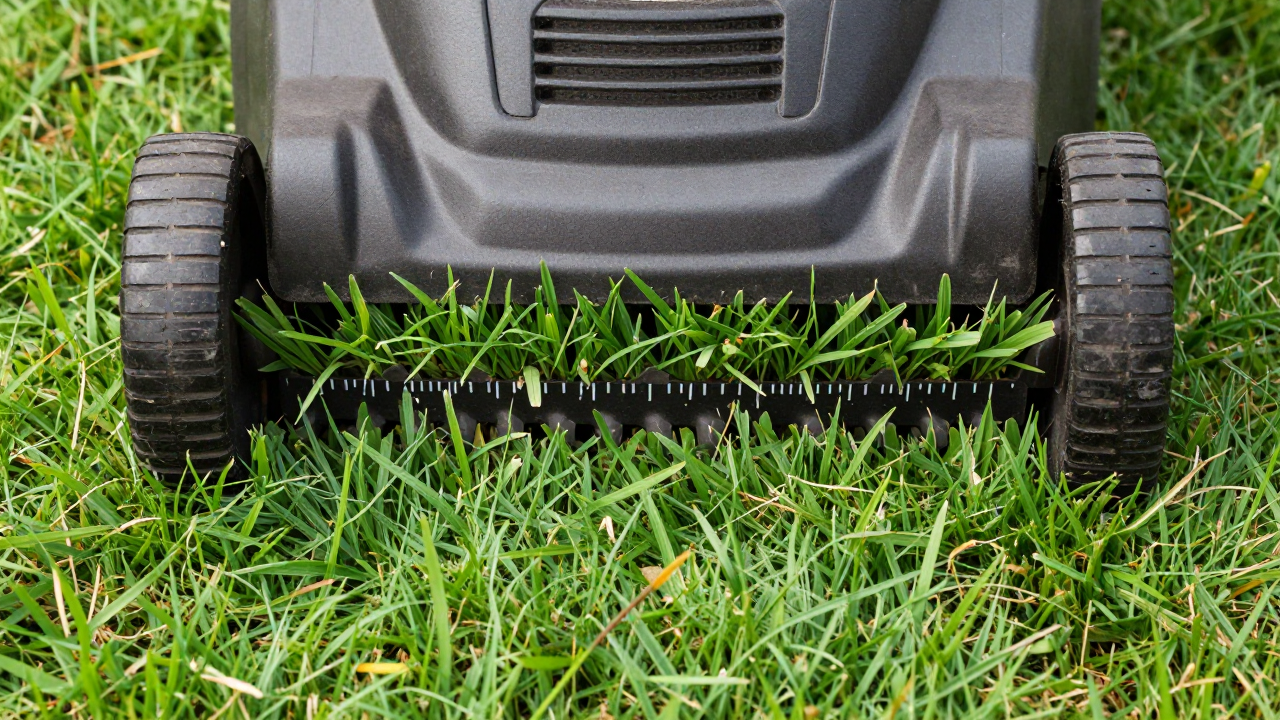
Blade Sharpness: Dull blades tear grass instead of cutting it cleanly. Torn blade tips turn brown and invite disease. Sharpen your mower blades every 20–30 hours of use, or at least twice per season. A sharp blade should easily cut a piece of paper without crushing it.
Mowing Frequency: Follow the one-third rule religiously. Mow every 5–7 days during peak growth seasons. In slower growth periods, extend to 7–10 days. Frequent mowing with sharp blades produces the densest, healthiest turf.
Pattern Rotation: Mow in a different direction each time—alternating between north-south, east-west, and diagonal patterns. This prevents soil compaction in the same lines, reduces wear patterns, and encourages upright growth instead of grain.
Common Mowing Mistakes and How to Avoid Them
Cutting too short: The most common mistake. Scalping (cutting below 1.5 inches for any grass type) exposes soil, stresses plants, and invites weeds and disease. Check your mower height setting before each season.
Mowing wet grass: Wet grass clumps, clogs the mower, and creates uneven cuts. Wait until grass is dry—usually mid-morning after dew dries.
Removing more than one-third: Skipping mowings and then cutting aggressively shocks the lawn. Stick to the schedule even if growth seems slow.
Neglecting blade maintenance: Dull blades are the silent killer of lawn quality. A sharp blade costs nothing to maintain and transforms results.
Ignoring grass type: Applying cool-season mowing heights to warm-season grass (or vice versa) stresses the plant. Know your grass species and adjust accordingly.
Signs Your Grass Needs Height Adjustment
Your lawn will tell you if the mowing height is wrong. Watch for these signals:
- Brown or scorched appearance: Grass is being cut too short or too aggressively. Raise height by 0.5 inches.
- Thin, sparse patches: Likely scalping. Increase height and mow more frequently at smaller increments.
- Increased weeds: Short grass can’t compete with weeds. Raising height to shade soil naturally suppresses weed germination.
- Fungal disease or mold: Grass may be too long or too wet when mowed. Reduce height slightly and avoid mowing wet grass.
- Rapid drying or drought stress: Height is too short to retain soil moisture. Raise by 0.5 inches, especially in summer.
- Uneven, rippled surface: Dull blade or inconsistent mowing pattern. Sharpen blades and rotate mowing direction.
Quick Reference Chart: Grass Type and Recommended Heights
Cool-Season Grasses
- Kentucky Bluegrass: 2.5–3.5 inches
- Perennial Ryegrass: 2.5–3.5 inches
- Tall Fescue: 2.5–3.5 inches
- Fine Fescue: 2.5–3.5 inches
Warm-Season Grasses
- Bermuda Grass: 1–2 inches (some cultivars tolerate 0.5 inches)
- Zoysia Grass: 1.5–2.5 inches
- St. Augustine Grass: 2–3 inches
- Buffalo Grass: 2–3 inches
When in doubt, start at the higher end of the range for your grass type and adjust downward if the lawn looks dense and healthy after a few weeks.
Action Steps: Implement These Changes This Week
You don’t need to overhaul your entire lawn care routine. Start with these concrete steps this week:
Step 1: Identify your grass type. Look at a patch of grass closely or check your lawn care records. If you’re unsure, contact your local cooperative extension office—they can identify it from a sample.
Step 2: Set your mower to the correct height. Most mowers have a height adjustment lever or dial. Set it to the mid-range for your grass type (3 inches for cool-season, 2 inches for warm-season). Adjust the height on all wheels evenly.
Step 3: Sharpen your mower blade. If you haven’t done this in over a month, do it now. Most hardware stores offer blade sharpening for $5–$15. Alternatively, buy a replacement blade for $20–$40.
Step 4: Mow this week. Follow the one-third rule: if your grass is 4.5 inches tall and your target is 3 inches, mow now. If it’s only 3.5 inches, wait a few days.
Step 5: Plan seasonal adjustments. Mark your calendar to raise height by 0.5 inches in summer and return to normal in fall. Set phone reminders if needed.
For additional seasonal lawn care guidance, check out our September lawn aeration and overseeding guide for fall prep, or review the early fall home maintenance checklist for a broader perspective on seasonal yard work. If you’re planning a larger outdoor project, our guide to the best times for home improvement projects by season can help you coordinate lawn care with other yard upgrades.
Proper mowing height is one of the easiest, highest-impact lawn care decisions you can make. Start this week, follow the one-third rule, and you’ll see a noticeably healthier, denser lawn within 3–4 weeks. The difference is that dramatic.