
How to Save Money With Time-of-Use Electricity Plans: Appliance Scheduling Guide
Learning how to save money with time-of-use electricity plans is one of the most effective ways to reduce your monthly utility bills without major home upgrades. Time-of-use (TOU) rates charge different prices for electricity depending on when you use it—peak hours typically cost 2-3 times more than off-peak hours. By shifting your appliance usage to cheaper periods, you can cut your electricity costs by 10-30% with minimal effort.
What Are Time-of-Use (TOU) Plans and Why They Matter
Time-of-use electricity plans are rate structures offered by many utility companies that charge variable prices based on demand throughout the day. Instead of paying a flat rate for every kilowatt-hour, TOU plans reward you for using electricity when demand is low and charge premium rates during high-demand periods.
The shift toward TOU plans reflects grid modernization and the growing use of renewable energy. Utilities need to manage peak demand, and TOU rates incentivize customers to help balance the grid. For homeowners, this creates a genuine opportunity to lower bills by being strategic about when appliances run.
Most utilities offer TOU plans voluntarily, though some regions are moving toward mandatory TOU pricing. Check your utility bill or website to see if TOU rates are available in your area—many homeowners don’t realize the option exists.
Understanding TOU Rate Structures: Peak, Off-Peak, and Shoulder Periods Explained
TOU plans typically divide the day into three pricing tiers:
- Peak hours: Usually 4 PM–9 PM on weekdays. Electricity demand is highest, and rates are at their maximum (often 40-50 cents per kWh or higher). This is when most people cook dinner, run AC, and use multiple appliances simultaneously.
- Off-peak hours: Usually 9 PM–6 AM. Demand is lowest, and rates are cheapest (often 10-20 cents per kWh). This is the ideal window for running large appliances.
- Shoulder periods: Early morning (6 AM–4 PM) and late evening (9 PM–midnight). Rates fall between peak and off-peak, typically 20-30 cents per kWh.
Some utilities use seasonal variations too—summer peak rates may differ from winter peak rates due to AC versus heating demand. Review your specific utility’s TOU schedule to understand your local rate structure.
Which Appliances Consume the Most Energy and Should Be Prioritized
Not all appliances are created equal when it comes to energy consumption. Prioritize rescheduling the highest-energy users first for maximum savings:
- Water heater: Often the second-largest energy consumer in homes (15-20% of total usage). If your utility offers a controllable water heater program, you can earn rebates while shifting heating to off-peak hours.
- Washing machine and dryer: Combined, these can use 3-5 kWh per load. Running laundry during off-peak hours saves $0.50-$1.50 per load depending on rates.
- Dishwasher: Uses 1.5-2.5 kWh per cycle. Delaying a cycle until 9 PM can cut the cost by 50-60%.
- Electric oven/range: Uses 2-5 kWh per use. This is harder to reschedule but worth noting for meal planning.
- Pool pump: If you have a pool, running the pump during off-peak hours can save hundreds monthly. Many pool owners run pumps 4-6 hours during the cheapest window.
- EV charging: If you own an electric vehicle, charging during off-peak hours (typically overnight) saves 30-50% versus peak charging.
- HVAC system: Pre-cool or pre-heat your home during shoulder/off-peak hours to reduce peak-period AC/heating demand.
Lower-priority appliances (refrigerators, lights, phone chargers) run continuously or are essential during peak hours, so focus your effort on the high-consumption items above.
Step-by-Step Appliance Scheduling Strategy for Maximum Savings
Step 1: Audit Your Current Usage
Review your utility bill or smart meter data to identify when you typically use the most electricity. Most utilities provide hourly usage breakdowns online. Look for peaks during 4-9 PM and identify which appliances are running during those hours.
Step 2: Map Your TOU Schedule Against Your Routine
Write down your household’s typical schedule: work hours, meal times, laundry days, and when you shower. Identify conflicts where essential activities fall during peak hours and where you have flexibility.
Step 3: Shift Flexible Appliances to Off-Peak Windows
Start with the easiest wins:
- Run laundry after 9 PM or before 6 AM instead of evenings.
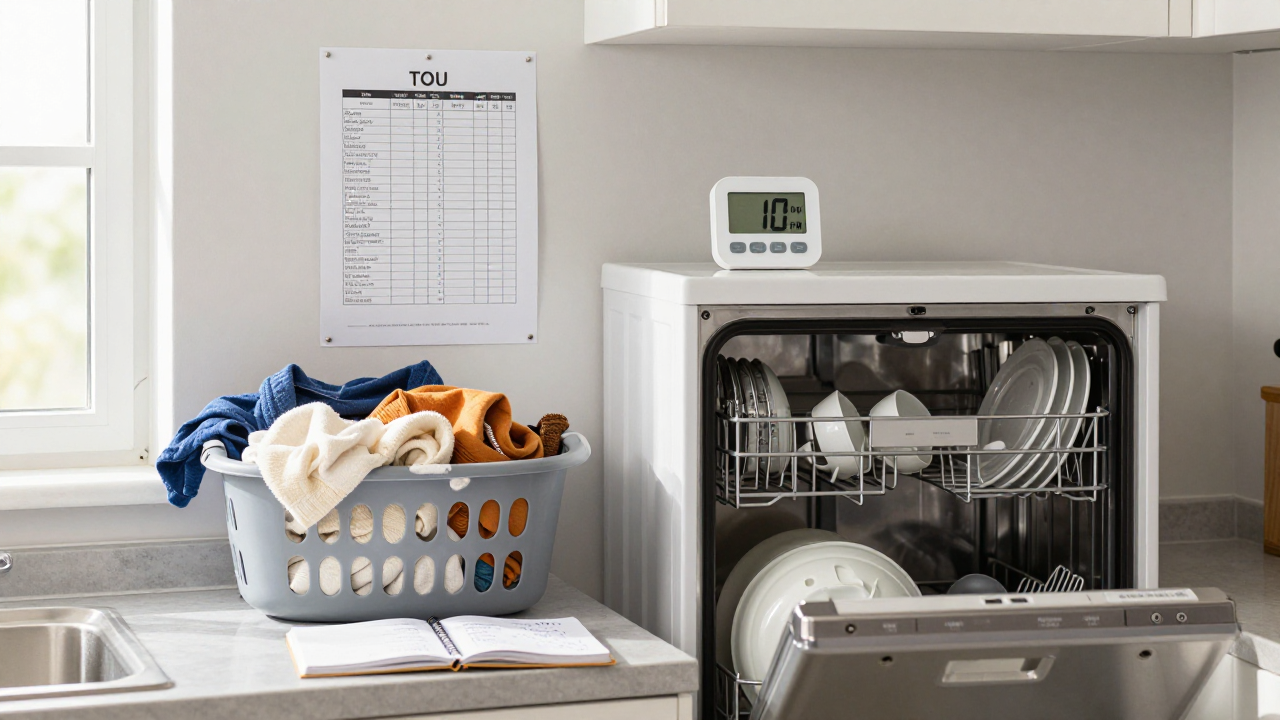
- Set your dishwasher to start at 10 PM using the delay-start feature (most modern dishwashers have this).
- Charge devices and EVs overnight during off-peak hours.
- If you have a smart thermostat, pre-cool your home to 72°F by 4 PM, then let it drift to 74-75°F during peak hours.
Step 4: Batch High-Energy Tasks
Consolidate activities to minimize peak-hour usage. Cook multiple meals at once and reheat during off-peak hours. Do all laundry on one off-peak day rather than spreading it throughout the week.
Step 5: Use Timers and Smart Plugs
Install smart plugs on appliances like water heaters and pool pumps to automate off-peak scheduling. Set them to turn on at 9 PM and off at 6 AM automatically. This removes the need for manual intervention.
Step 6: Adjust Cooking Times
Prepare meals during shoulder hours (6-10 AM or 1-4 PM) instead of peak dinner time. Use a slow cooker or Instant Pot to cook during off-peak hours and reheat during peak hours. Grilling outdoors during peak hours is also a practical alternative to using your electric oven.
How to Calculate Your Potential Savings With TOU Rates
Calculating savings is straightforward with your utility’s rate schedule:
Example Calculation:
Assume your TOU rates are:
- Peak (4-9 PM): $0.45/kWh
- Off-peak (9 PM-6 AM): $0.12/kWh
- Shoulder (6 AM-4 PM): $0.25/kWh
If you run your dryer during peak hours, it uses 4 kWh: 4 × $0.45 = $1.80 per load.
If you shift that same load to off-peak hours: 4 × $0.12 = $0.48 per load.
Savings per load: $1.80 − $0.48 = $1.32. If you do laundry twice weekly, that’s $137 annually from one appliance alone.
Calculate Your Household Total:
- List your high-energy appliances and their typical monthly kWh usage (check your utility bill or smart meter).
- Estimate what percentage you can shift to off-peak hours (be realistic—you can’t shift everything).
- Multiply the shifted kWh by the difference between peak and off-peak rates.
- Multiply by 12 to get annual savings.
Most households see $15-40 monthly savings (roughly $180-480 annually) from basic TOU optimization without major lifestyle changes.
Practical Tools and Apps to Track Usage and Optimize Scheduling
Modern technology makes TOU optimization easier than ever:
- Smart Meters and Utility Apps: Most utilities now offer free apps showing real-time or hourly usage. Use this data to identify your peak-hour appliances and verify that your shifts are working.
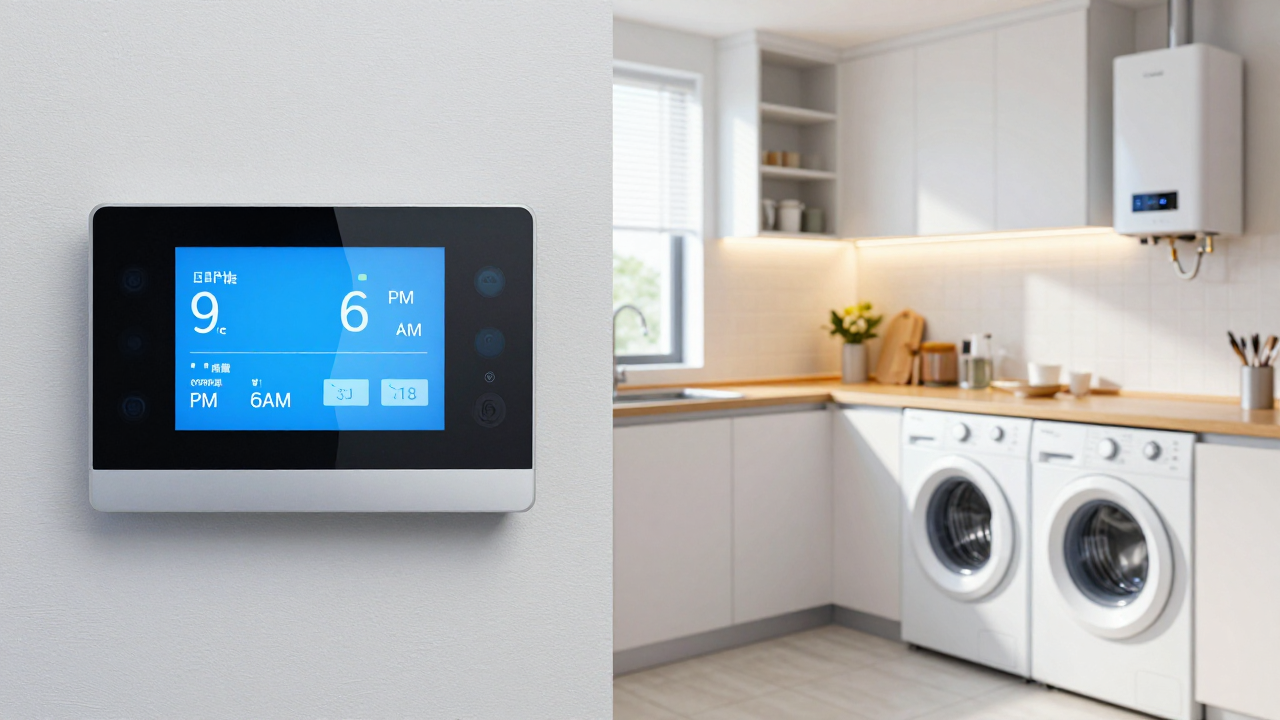
- Smart Thermostats (Nest, Ecobee, Honeywell): These learn your schedule and automatically pre-heat/cool during off-peak hours. Many integrate with TOU rates and show energy cost estimates.
- Smart Plugs (Kasa, Wyze, TP-Link): Automate appliance scheduling and monitor individual device energy use. Set schedules directly in the app.
- Whole-Home Energy Monitors (Sense, Neurio): These identify which appliances consume the most energy and suggest optimization opportunities. Some integrate with TOU rates to estimate savings.
- Utility Company Programs: Many utilities offer free or discounted smart thermostats, water heater controls, or demand-response programs that pay you to reduce peak usage. Check your utility’s website for rebates.
Start with your utility’s free app and smart meter data. If you’re serious about optimization, invest in a smart thermostat or whole-home monitor—they typically pay for themselves within 1-2 years through energy savings.
Common Mistakes Homeowners Make With TOU Plans
Mistake 1: Not Reading the Fine Print
Some TOU plans have higher monthly fees or minimum charges that offset savings for low-usage households. Compare the total bill under your current plan versus TOU before switching. Your utility should provide an estimate.
Mistake 2: Shifting Appliances Without Checking Capacity
Running too many high-energy appliances simultaneously during off-peak hours can trip your breaker. If you shift laundry, dishwasher, and EV charging all to 10 PM, you might exceed your home’s electrical capacity. Stagger start times by 30-60 minutes.
Mistake 3: Ignoring Shoulder Hours
Shoulder rates (6 AM-4 PM) are significantly cheaper than peak but often overlooked. Running appliances at 2 PM instead of 6 PM saves money even if it’s not the absolute cheapest window.
Mistake 4: Setting and Forgetting
TOU rates and schedules change seasonally. Review your utility’s rate schedule twice yearly (spring and fall) to ensure your appliance timing still aligns with the cheapest hours. Check out our guide to the best times of year for home improvement projects by season to plan complementary upgrades alongside your TOU strategy.
Mistake 5: Not Accounting for Comfort
Saving $20 monthly isn’t worth freezing in winter or sweating in summer. Pre-cooling/heating strategies should maintain comfort while reducing peak-hour HVAC demand. Use programmable thermostats to automate this without manual adjustment.
Real-World Savings Examples and Case Studies
Case Study 1: Family of Four, Moderate Usage
The Martinez family switched to TOU rates and made three changes: shifted laundry to 10 PM (2 loads/week), set their dishwasher delay-start to 11 PM, and adjusted their water heater timer to heat during off-peak hours. Result: $28 monthly savings ($336 annually). Their peak-hour usage dropped 18%, and they maintained full comfort and convenience.
Case Study 2: EV Owner with Pool
The Chen household has a Tesla and a pool pump. By charging the vehicle overnight (off-peak) instead of 6 PM and running the pool pump 4-6 AM instead of 2-6 PM, they reduced peak usage by 35%. Monthly savings: $67 ($804 annually). The pool is still clean, the car is always charged, and they use less peak electricity.
Case Study 3: Remote Worker, High Daytime Usage
Sarah works from home and initially worried TOU rates would hurt her bill since she’s home during peak hours. She pre-cools her house to 71°F by 4 PM and lets it drift to 74°F during peak hours (maintaining comfort). She also shifted laundry to early morning (6-7 AM) before starting work. Result: $15 monthly savings ($180 annually) with no lifestyle disruption.
Tips for Combining TOU Optimization With Other Energy-Saving Measures
TOU scheduling works best as part of a broader energy-efficiency strategy. Consider pairing it with complementary improvements:
- Weatherization: Sealing air leaks and upgrading insulation reduces HVAC demand during peak hours, making pre-cooling/heating strategies more effective. See our guide on how to weatherize an older home before fall for low-cost fixes.
- Efficient Appliances: An ENERGY STAR dishwasher or washing machine uses 30-50% less energy than older models. Combined with TOU scheduling, the savings compound.
- Smart Thermostats: These optimize pre-cooling and pre-heating automatically, reducing manual effort while maximizing TOU savings.
- Water Heater Upgrades: Insulating your water heater tank or upgrading to a heat pump water heater reduces standby losses and pairs well with off-peak heating schedules.
- Solar + Battery Storage: If you have solar panels, pair them with battery storage to charge during peak hours (using solar) and discharge during peak pricing windows. This maximizes the value of your solar investment.
Start with TOU scheduling (free or low-cost) before investing in new appliances or upgrades. Once you’ve optimized your usage patterns, efficiency improvements deliver even greater returns. For quick wins, consider effortless DIY home projects to transform your space fast.
Creating Your Personalized TOU Action Plan
Here’s how to get started this week:
Day 1: Check if your utility offers TOU rates. Visit your utility’s website or call customer service. Request a rate comparison showing your estimated bill under TOU versus your current plan.
Day 2: If TOU makes financial sense, enroll (usually done online or by phone). Download your utility’s app to view hourly usage and understand your peak hours.
Day 3: Identify your three highest-energy appliances and audit when they currently run. Calculate potential savings using the formula in Section 5.
Days 4-7: Implement one change per day (shift laundry, set dishwasher delay-start, adjust water heater timer, pre-cool your home). Use smart plugs or your appliance’s built-in timer if available.
Week 2+: Monitor your utility app to verify peak-hour usage is dropping. After one billing cycle, compare your bill to previous months. Adjust your strategy if needed.
The beauty of TOU optimization is that it requires no capital investment—just awareness and scheduling. Most households see measurable savings within the first month, and the effort pays dividends year after year as electricity rates continue climbing.
Start small, track results, and expand your strategy as you identify more opportunities. Even modest changes—shifting laundry and delaying your dishwasher—deliver $100-200 in annual savings with zero lifestyle sacrifice.